Planning your first trip to Morocco? Between the busy streets of Marrakech, the old medina of Fez and the beaches of Agadir, every place feels different. A little planning helps you enjoy the food, markets and sights without worrying about everyday travel problems. Here are the essentials worth knowing before you go.
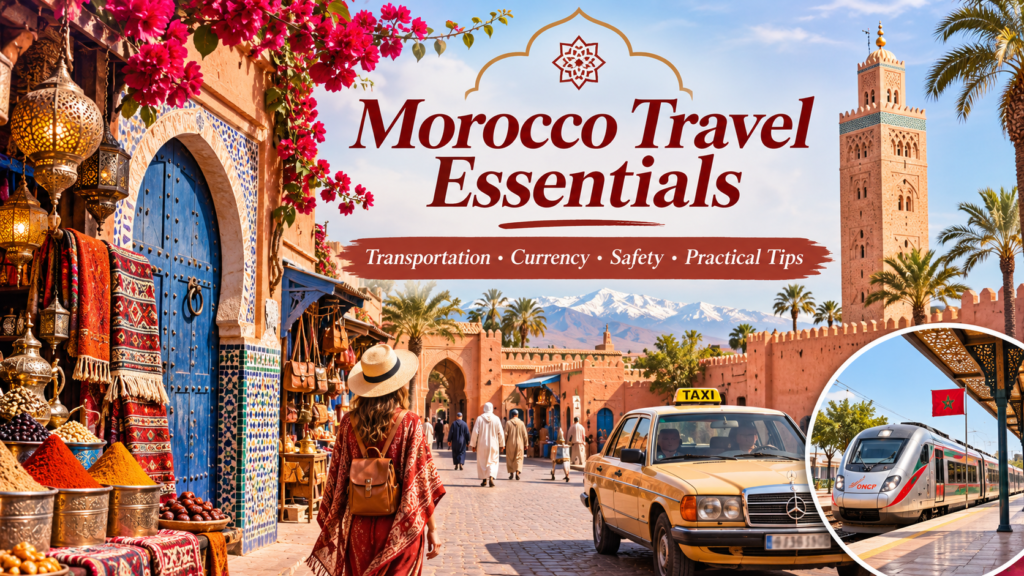
How to Get Around Morocco
Trains: Morocco’s ONCF trains connect popular cities including Casablanca, Rabat, Fez and Marrakech. The Al Boraq high-speed train runs between Tangier and Casablanca, stopping at Kenitra and Rabat. Book ahead for busy dates, especially weekends and holidays.
Buses: CTM and Supratours serve many places without convenient train connections. They are useful for routes towards Essaouira, Agadir and smaller towns. Check departure stations carefully, as different operators may leave from different locations.
Taxis: Small petit taxis are mainly for trips within a city; grand taxis cover longer journeys and sometimes carry several passengers. Ask the driver to use the meter where available, or agree on the price before setting off. Keep small notes for payment.
What Currency Should You Carry?
Morocco uses the Moroccan dirham (MAD). Hotels, larger restaurants and some shops take cards, but market stalls, local cafés and taxis often prefer cash. You can withdraw dirhams from ATMs or exchange money at authorised exchange offices. Compare rates and keep exchange receipts, which may be needed to change leftover dirhams before leaving.
Always carry a mix of small notes and coins. It makes buying snacks, paying for short rides and tipping much easier.
Is Morocco Safe for Tourists?
Many travellers explore Morocco independently, but busy tourist areas can attract pickpockets, bag-snatchers and unofficial guides. Keep your phone and wallet secure, avoid quiet streets late at night, and use licensed guides for medina tours. At an ATM, check your surroundings and shield your PIN.
For road trips, allow extra time and avoid unfamiliar mountain roads after dark. Consider travel insurance that covers medical care and planned activities.
If you need help preparing an online application, you can apply for a Morocco visa here. An application service does not decide visa approvals.
Local Customs and Everyday Travel Tips
Moroccan Arabic and Amazigh are widely spoken, while French is useful in many cities. Knowing “salam” for hello and “shukran” for thank you can make everyday conversations easier.
Dress respectfully, especially in rural communities or near religious places. Ask before photographing people. During Ramadan, some restaurants change their opening hours, so plan meals accordingly.
Bring comfortable walking shoes for uneven medina lanes, a refillable bottle, sun protection and a light layer for cool evenings. Use bottled or reliably filtered drinking water when unsure of local water quality.
Check Your Morocco Visa Requirements Early
Visa rules depend on your nationality and travel documents. Some visitors can enter without a visa, while others may qualify for a short-stay eVisa. Before booking, review the Morocco tourist eVisa requirements and check whether you are eligible.
Why Choose Our eVisa Service?
For travellers also planning a trip to Rwanda, our eVisa assistance makes paperwork easier. The service offers document checks, SSL-protected online submission, 24/7 support, mobile access and application tracking.
Processing may take around 4–7 working days, depending on the application route; approval is always decided by Rwanda’s immigration authorities. A service-fee refund may apply if a rejection results from our error, subject to the published terms.
With transport planned, a little local cash and the right travel documents, you can spend more time discovering Morocco and less time sorting out practical details.
